

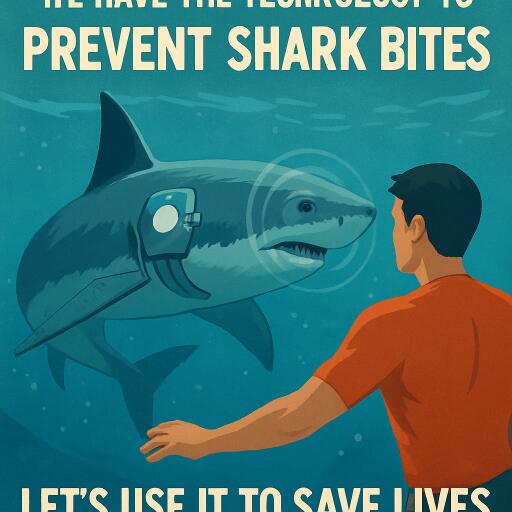
We have the technology to prevent shark bites. Let’s use it to save lives
A serious shark incident at Sydney’s Coogee Beach has once again pushed ocean safety into the national spotlight. Whenever such events occur, public anxiety rises quickly. But while concern is understandable, the conversation should focus less on fear and more on smarter prevention.
Shark bites are still exceptionally rare, especially when compared with the huge number of people who swim, surf, dive and fish in Australian waters every year. Even so, the pattern of encounters appears to be shifting, and that requires a modern response built on science, technology and realistic risk management.
The first point is simple: interactions increase when both humans and sharks use the same space more often. Coastal waters are busier for more months of the year than they once were. Mild winters, warmer seas and year-round water sports mean more people are entering shark habitat more frequently. That alone raises the odds of an encounter.
At the same time, ocean warming is changing marine life behaviour. Sharks are highly influenced by water temperature, and different species are drawn to different thermal ranges. As sea conditions change, shark movements can shift as well. This does not necessarily mean there are more sharks overall, but it can mean they are appearing in places or seasons where people are less used to seeing them.
Claims that shark populations are booming are often overstated. Several of the large species most associated with serious bites are under pressure and remain protected because of conservation concerns. That creates a difficult balancing act: public safety matters, but so does the preservation of marine predators that play an important ecological role.
Any successful policy has to recognise both realities. The goal should not be to wipe sharks out of the ocean. It should be to reduce the chance of dangerous encounters while allowing people and wildlife to share coastal environments more safely.
It is also important to keep the threat in perspective. Fatal shark bites remain very uncommon. For frequent ocean users such as surfers and spearfishers, the chance of encountering a shark is naturally higher because of time spent in the water. But survival in a serious incident often depends on something more practical than anything else: rapid emergency response. Quick assistance, trained first responders and access to trauma care save lives.
That is why prevention systems should be judged not just by whether they spot sharks, but by whether they help clear the water faster and get aid to people sooner.
Traditional methods such as shark nets and old-style drum lines belong to an earlier era of coastal management. Nets do not create an impenetrable barrier. Instead, they capture marine animals indiscriminately, including dolphins, turtles and whales, while offering limited evidence of meaningful protection. Their ecological cost is high, and their benefit is far from clear.
Older baited drum lines have also been widely criticised because they can leave animals hooked for long periods, often leading to death. These approaches were designed around removing sharks rather than understanding and managing risk. That strategy is increasingly hard to justify in an age of advanced monitoring tools.
Newer systems offer a better path. Smart drum lines, for example, can alert responders when an animal is hooked so it can be attended to quickly, tagged and released. This reduces unnecessary deaths and improves data collection about shark movements. Used carefully, such tools can support safety without causing the same level of collateral damage seen with older methods.
Drones may be the most promising technology of all. Aerial surveillance can monitor beaches in real time, identify large marine animals near swimmers and warn people before danger escalates. In clear coastal conditions, drones provide a rapid and flexible view that fixed infrastructure cannot match.
What makes them especially powerful now is the rise of automation and artificial intelligence. Drone systems can be trained to recognise shark shapes, patrol designated coastal zones and relay alerts instantly to lifeguards or beach authorities. In the near future, coordinated drone fleets could follow set patrol routes, verify sightings and help direct water users back to shore before panic spreads.
Regulations around airspace and beach operations will need to keep pace, but low-altitude coastal drone programs are a manageable challenge. If rules are adapted sensibly, these systems could become standard equipment at high-use beaches.
Personal shark deterrents are also improving. Some wearable technologies use electric or electromagnetic signals that can discourage sharks from approaching too closely. Their effectiveness varies by species and conditions, but they are part of a growing safety toolkit. Designers are also experimenting with surfboard modifications, including visual techniques that reduce the silhouette from below and may lower the chance of a mistaken strike.
None of these tools alone is a complete answer. But together they point to a far more sophisticated model of shark safety: detect early, warn quickly, respond fast and minimise ecological harm.
That model also requires better research. Scientists still have much to learn about why bites occur in certain places, seasons and conditions. Weather, water clarity, prey movement, human activity and shark behaviour can all influence risk. Better data can help authorities issue more precise warnings and deploy the right technologies where they matter most.
The lesson is clear. Beaches do not have to choose between human safety and marine conservation. Smarter systems now exist that can reduce danger without relying on blunt, environmentally destructive tactics. The technology is available. The need is obvious. What remains is the will to use these tools widely and effectively before the next preventable tragedy occurs.



Leave a Reply