

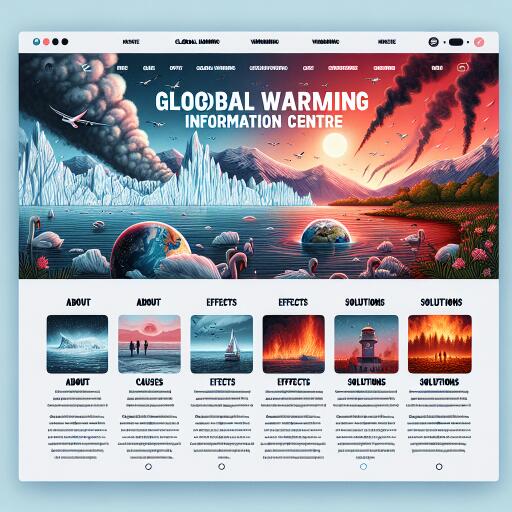
Build Global Warming Info Website
A clear, trustworthy website about global warming can turn confusion into understanding and inspire practical action. This guide outlines how to build an accessible, science-grounded hub that explains what global warming is, why it’s accelerating, what’s at stake, and how communities and individuals can respond—without overwhelming readers.
Define the mission and audience
- Mission: demystify climate science, connect causes to real-world impacts, and highlight solutions people can adopt today.
- Audience: students, educators, local leaders, and anyone seeking reliable, plain-language explanations and actionable steps.
- Tone: factual, empathetic, solutions-focused. Avoid jargon; explain terms with a friendly, rigorous voice.
Core topics to cover
- The science: how trapping heat in the atmosphere raises global temperatures, the role of energy balance, and long-term trends.
- Greenhouse gases: why carbon dioxide and methane are potent warming agents; where they come from (energy, transport, agriculture, land use).
- Visible impacts: melting ice and rising seas, stronger heatwaves and storms, shifting rainfall, wildfires, ocean warming and acidification, risks to food, water, and health.
- Solutions that scale: clean electricity, efficiency and electrification, restoring forests and ecosystems, climate-smart agriculture, conservation, better transit, and cutting waste.
- Everyday actions: reducing energy use at home, choosing low-carbon travel, mindful consumption, and community initiatives that multiply impact.
Site structure and user experience
- Choose a mainstream content-management system or no‑code builder with strong performance and responsive design.
- Keep navigation simple: Home, What Is Global Warming, Causes, Impacts, Solutions, Take Action, FAQ, Glossary.
- Ensure fast load times: lightweight themes, optimized images, caching, and minimal scripts.
- Design for accessibility: high-contrast colors, legible fonts, keyboard navigation, descriptive alt text, and clear headings.
- Make content scannable: short paragraphs, subheads, bullet points, and prominent summaries.
Content style that earns trust
- Lead with clear headlines and concise takeaways; follow with deeper sections for curious readers.
- Use analogies to clarify complex mechanisms (for example, comparing the greenhouse effect to a thermal blanket).
- Include simple data visuals to show trends (temperature records, emissions by sector) and explain what they mean for people.
- Add a myth-versus-fact corner to debunk common misconceptions without amplifying misinformation.
- Cite reputable institutions in plain text where appropriate; avoid cluttering pages with dense bibliographies.
Visuals that illuminate, not distract
- Use photos, icons, and lightweight charts to break up text and anchor key ideas.
- Compress media for speed; prefer vector graphics and modern image formats where possible.
- Apply color palettes that remain legible for color‑vision deficiencies; label charts directly.
- Write descriptive alt text that conveys meaning, not just appearance.
SEO foundations to reach the right readers
- Map topics to search intents: causes of global warming, climate impacts by region, and ways to cut a carbon footprint.
- Craft page titles and meta descriptions that promise clear value and match reader questions.
- Use structured headings (H1–H3) and internal links that guide visitors through related topics.
- Optimize performance and mobile usability; fast, stable pages rank and retain visitors better.
Suggested pages and features
- Home: succinct overview with links to causes, impacts, and solutions.
- What Is Global Warming: the greenhouse effect, historical context, and current trends.
- Causes: emissions sources, feedback loops, and land-use change.
- Impacts: regional examples, equity dimensions, and health risks.
- Solutions: clean energy, efficiency, nature-based approaches, and policy levers explained in practical terms.
- Take Action: step-by-step guides for households, schools, and local groups.
- FAQ: short answers to the most common questions.
- Glossary: plain-language definitions for technical terms.
Build and launch checklist
- Select a fast, well-supported theme or template; customize with accessible colors and typography.
- Set up core pages with consistent layouts; add a clear breadcrumb and footer navigation.
- Implement basic analytics and a privacy notice; collect only essential, consented data.
- Add a lightweight feedback form so visitors can suggest improvements or ask questions.
- Test across devices and connections; fix broken links, typography glitches, and contrast issues.
- Create an editorial calendar for updates (e.g., explainer posts, solution spotlights, community case studies).
Editorial integrity and maintenance
- Establish fact-checking and periodic content reviews to keep figures and recommendations current.
- Flag uncertainty where it exists; explain confidence levels without hedging on well‑established science.
- Invite community input through the feedback form and publish updates that respond to common questions.
Why this matters now
People are seeing rapid changes in their weather, water, food systems, and health, and they deserve explanations that are accurate and empowering. A well-crafted website can turn concern into informed action—helping readers understand the forces driving warming, the choices that reduce emissions, and the local solutions that build resilience.



Leave a Reply