

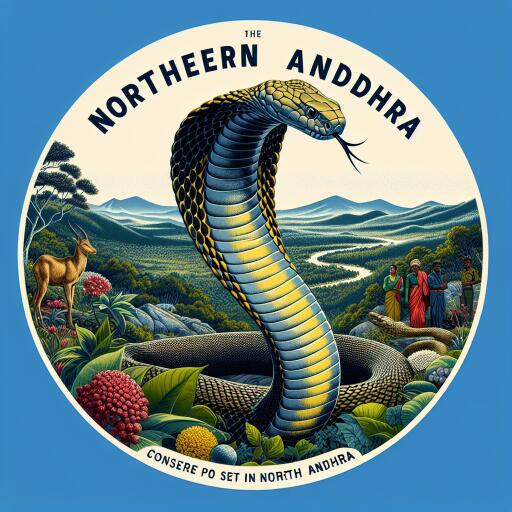
Bold Conservation Effort Set to Protect King Cobra in North Andhra
In a groundbreaking move for North Coastal Andhra, a robust conservation initiative aims to safeguard the King Cobra, one of the world’s most fascinating and often misunderstood reptiles. Known scientifically as Ophiophagus Hannah, this conservation effort seeks to foster a secure future for the majestic snake within the region.
Beginning in 2016, this initiative has been led by the Eastern Ghats Wildlife Society in collaboration with the Andhra Pradesh forest department. This project is supported by prominent institutions such as the Madras Crocodile Bank Trust, Agumbe Rainforest Research Station, and Andhra University.
The project’s mission is twofold. A group of dedicated researchers is delving into the ecology, behaviors, and natural history of the King Cobra through in-depth studies and educational programs. By focusing on the King Cobra as an umbrella species, they aim to facilitate the establishment and protection of critical forest areas and corridors across the Eastern Ghats.
Efforts like these are pivotal not only to ensure the survival of the King Cobra but also in preserving the broader biodiversity of one of India’s most varied landscapes.
The Eastern Ghats, as noted by expert conservationists, are rich with diverse habitats, from deciduous forests and wetlands to grasslands, sea coasts, and rivers. However, these ecosystems face severe threats due to increasing habitat destruction.
Urban sprawl and deforestation have fragmented these vital habitats, compounded by escalating human-snake conflicts fueled by fear and misinformation. Consequently, indiscriminate killings of snakes have become rampant, putting King Cobras at risk of local extinction without urgent intervention.
The initiative sets out various research objectives to address these issues. Field teams are actively assessing habitat suitability and mapping species distribution using cutting-edge GIS technology. They are also conducting comprehensive analyses of spatial and temporal diversity within snake populations in the area.
Pinpointing critical habitat patches and nesting sites for the King Cobra is paramount for prioritizing conservation efforts. This essential research will inform site-specific actions and provide guidance to state authorities on implementing effective management strategies.
Understanding the impact on rural communities, who often contend with resource constraints and limited literacy, the project incorporates extensive educational outreach. Training on snake rescue, first aid, and conflict resolution is part of the plan to nurture a harmonious coexistence between humans and these remarkable serpents.
By designating the King Cobra as a flagship species—akin to the iconic tigers or elephants—the initiative aspires to conserve a vital predator while ensuring the preservation of an entire ecosystem. This strategic approach guarantees that future generations are bequeathed a rich, biodiverse landscape.



Leave a Reply